One of my favourite things to do is host events.
One of my favourite things to do is host events.
Not because I don’t enjoy delivering keynotes. I do.
Not because I don’t enjoy sitting on panels or taking part in fireside chats. I do.
But hosting is different.
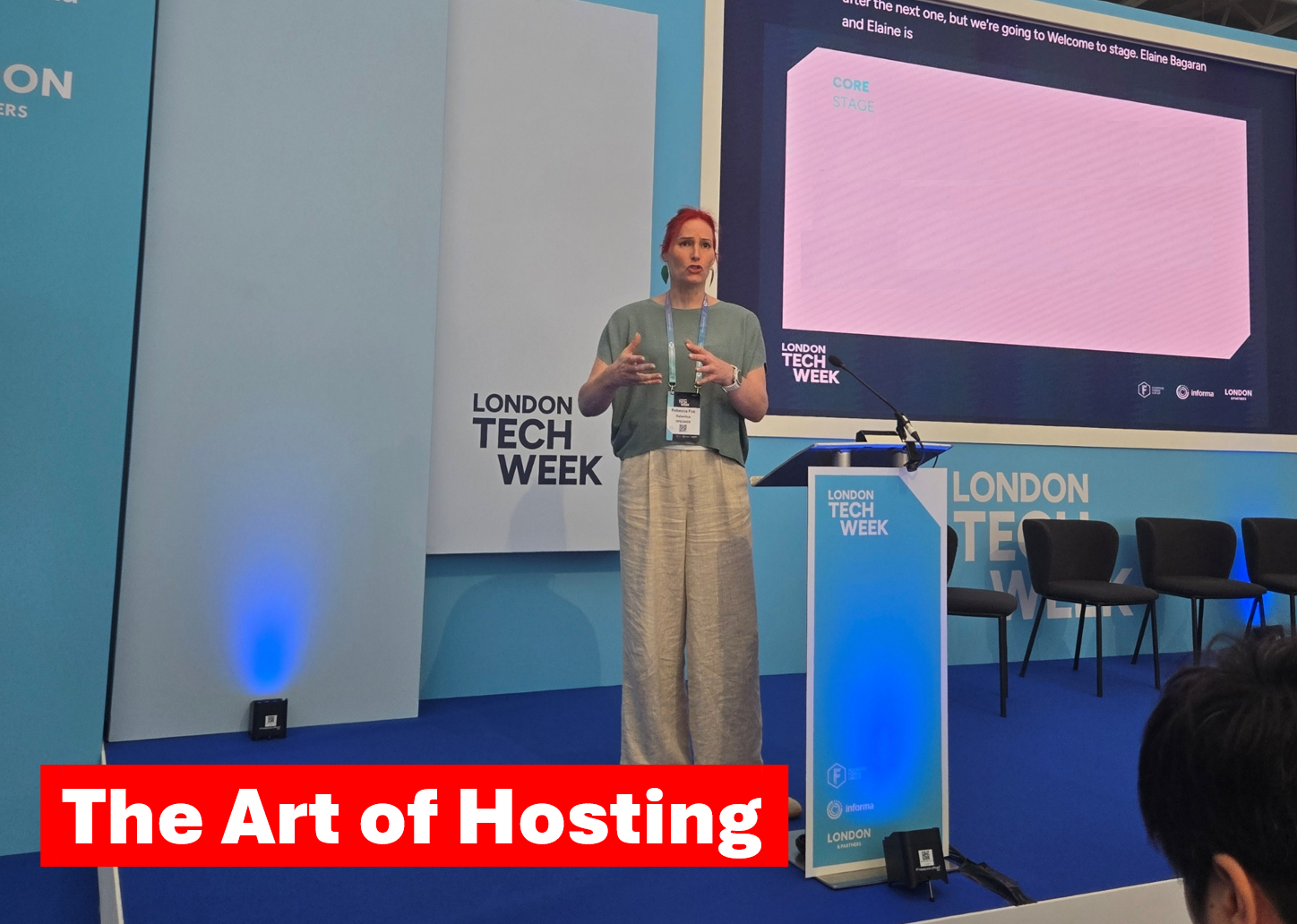
Last week I had the privilege of hosting the Core Stage at London Tech Week. Cloud in the morning. Cyber and resilience in the afternoon. Hundreds of attendees, a packed agenda and some brilliant speakers covering everything from AI-ready cloud platforms and enterprise architecture through to cyber resilience, AI security and quantum computing.
It was exactly the sort of day I love.
As I walked onto the stage at 9:30am to open the programme, I found myself talking about a world that feels increasingly like it’s on fire. Trade wars. Political wars. Real wars. Cyber wars. It might not have been the most uplifting opening of the day, but it reflected a reality many leaders are dealing with right now. Organisations are trying to grow, innovate and transform whilst navigating uncertainty from almost every direction.
That challenge sat behind many of the conversations throughout the day.
The cloud sessions explored how organisations create the foundations for growth. How they scale. How they simplify. How they build architectures capable of supporting AI and modern digital services. The cyber sessions then focused on how organisations protect those capabilities. How they manage risk. How they build resilience. How they recover when things go wrong.
What struck me was how connected those conversations really are.
You can’t talk about innovation without talking about resilience. You can’t talk about AI without talking about security. You can’t talk about growth without talking about risk.
The best organisations understand that these aren’t competing priorities. They’re all part of the same conversation.
The funny thing about hosting is that most people think it’s about talking.
It isn’t.
In fact, some of the best hosts spend less time talking than almost anyone else on stage.
The real job is creating the conditions for everybody else to perform at their best.
That starts long before anyone walks onto the stage. It’s understanding the agenda, understanding the speakers and understanding the audience. It’s creating energy at the start of the day and maintaining it as the hours pass. It’s helping speakers feel comfortable, keeping sessions on time and making sure the audience remains engaged.
It’s also about reading the room.
Sometimes the audience wants technical detail. Sometimes they want practical examples. Sometimes they need a little encouragement to ask questions. Sometimes they simply need permission to challenge what’s being said.
A good host adapts.
That is one of the reasons I enjoy it so much.
Throughout my career, whether leading technology teams, major transformation programmes or entire functions, I’ve always believed that leadership is less about being the smartest person in the room and more about helping the room become smarter.
Hosting follows exactly the same principle.
Your success isn’t measured by how much you say.
It’s measured by how well everyone else performs around you.
Some of my favourite moments from the day weren’t during the presentations themselves. They happened in the gaps between sessions. Watching speakers continue discussions off-stage. Seeing attendees comparing notes over coffee. Listening to people debate ideas that had been raised during a panel. Watching introductions turn into conversations.
That’s where the real value of events often lives.
Not just on the stage, but around it.
The speakers throughout the day were exceptional. They brought expertise, honesty and practical experience to topics that many organisations are wrestling with right now. There was plenty of discussion about AI, cloud strategy, cyber resilience and emerging technology, but what stood out most was the willingness to share real experiences rather than simply present polished answers.
The audience played their part too.
The questions were thoughtful, challenging and often sparked some of the most interesting conversations of the day. As a host, that’s exactly what you want. A room full of people who are curious, engaged and prepared to participate rather than simply observe.
Of course, events of this scale don’t happen because somebody stands on a stage holding a microphone.
There are a huge number of people working behind the scenes to make everything run smoothly.
The organisers, sponsors, production teams, AV teams, technical teams and stage managers all play a critical role. They are often invisible to the audience, but without them there is no event.
A special thank you to Sean, my stage manager for the day, who was absolutely on top of everything from start to finish. Every host knows how important it is to have somebody backstage keeping things running smoothly, and Sean did exactly that.
As the day came to a close and I walked back onto the stage for the final time, I found myself reflecting on something I’ve learned repeatedly throughout my career.
Whether you’re leading a team, running a business, hosting an event or chairing a panel, success is rarely about being the centre of attention.
It’s about creating an environment where other people can do their best work.
The best leaders do that.
The best hosts do too.
Hosting the Core Stage at London Tech Week was an absolute pleasure. Huge thanks to the speakers, the audience, the organisers, sponsors and everyone working behind the scenes to make it happen.
Then it was straight back to running Relentica, working with clients and helping organisations navigate technology, AI and cyber challenges.
But if you’re looking for a keynote speaker, panel chair, moderator or event host for your next event…
You do know that’s something I do, right?