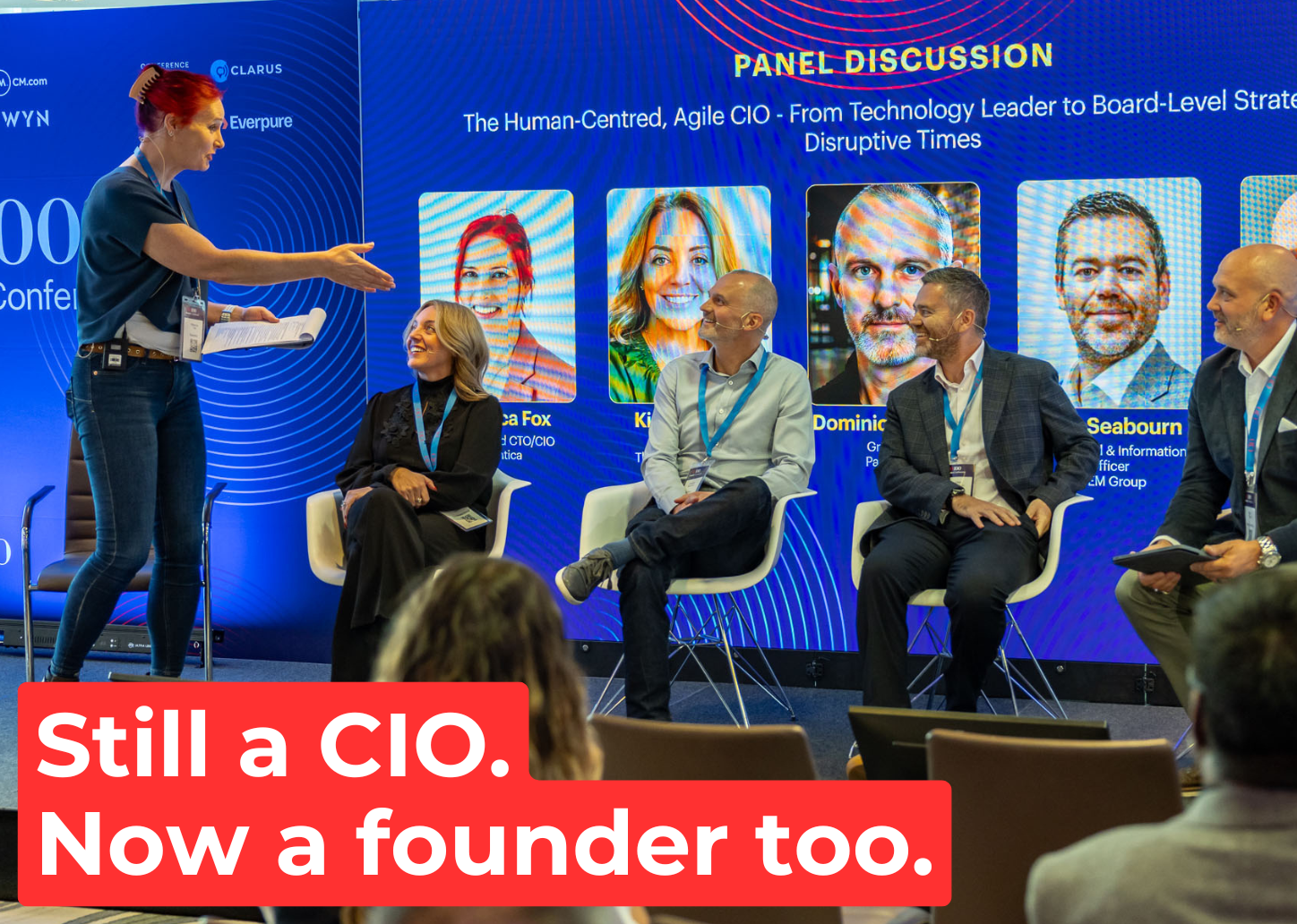
Still a CIO. Now a founder too.
Being recognised in the CIO 100 in 2024 and 2025 meant a great deal to me. Having founded Relentica, I’m no longer eligible for the list, but being back at the CIO 100 Awards & Conference on 24 September felt good. These are my peers. Starting a business hasn’t switched off the CIO in me. I’m still a CIO, and now a founder too.
This year, I hosted Track 2, drawing out perspectives from the panellists and bringing the audience into conversations about the challenges leaders are facing today. That’s what I enjoy about hosting: asking the question that helps someone get beyond the prepared answer, making connections between different experiences, and creating space for a useful discussion.
Two conversations particularly connected with the work I’m doing through Relentica: From AI Hype to Hard ROI and The Human-Centred, Agile CIO. Together, they brought the commercial and human responsibilities of leadership into focus.
AI is firmly a business conversation now. The questions facing CIOs go well beyond choosing tools. Where should we invest? What deserves to scale? How will we know it has made a difference? And how do we move beyond an interesting experiment to something the organisation can use and sustain?
I talk a lot about revenue, margin and resilience because technology investment needs to earn its place. We should be able to explain what improves for the business, its customers and its people. Those questions matter whether you’re leading a global technology function or building a business of your own.
But the discussion about human-centred leadership brought me back to something equally important. With so much attention on AI and automation, it can feel as though people are becoming an afterthought. In my experience, they matter more than ever.
People need to understand what is changing and why. They need the confidence to question it, the opportunity to learn, and enough trust in their leaders to say when something isn’t working. A commercially sound strategy still depends on people making decisions, working together and doing the difficult work of changing how an organisation operates.
CIOs carry a lot of that responsibility. They’re expected to understand the technology, communicate its value, manage risk, support their teams and help shape the business. Often, all at once.
Which is why events like this matter. There’s something valuable about being in a room with people who recognise the challenges without needing a lengthy explanation. Different organisations, different circumstances, but plenty of shared experience.
My strongest takeaway was simple: you’re not alone.
There are peers asking similar questions, dealing with similar tensions and trying to make good decisions with imperfect information. Making time for those conversations can help you think more clearly about your own.
It was lovely to have people come up afterwards and tell me I’d done a brilliant job hosting. I appreciated that. What pleased me most was the engagement: people contributing, responding and getting involved in conversations that mattered to them.
Thank you to the panellists, everyone who joined the discussions, and the CIO 100 team for having me back. It was a pleasure to be part of it.
And if you’re planning an event and need a speaker, host or panel chair who understands the realities of business and technology leadership, I’d love to hear from you.