AI literacy is now part of the leadership job
I absolutely love giving keynotes. Standing on a stage in a large auditorium, with an audience ready to listen, is an opportunity to get people thinking. I bring my experience of technology and leadership, but every talk needs its own approach: the language, tone and delivery that will connect with the people in that room.
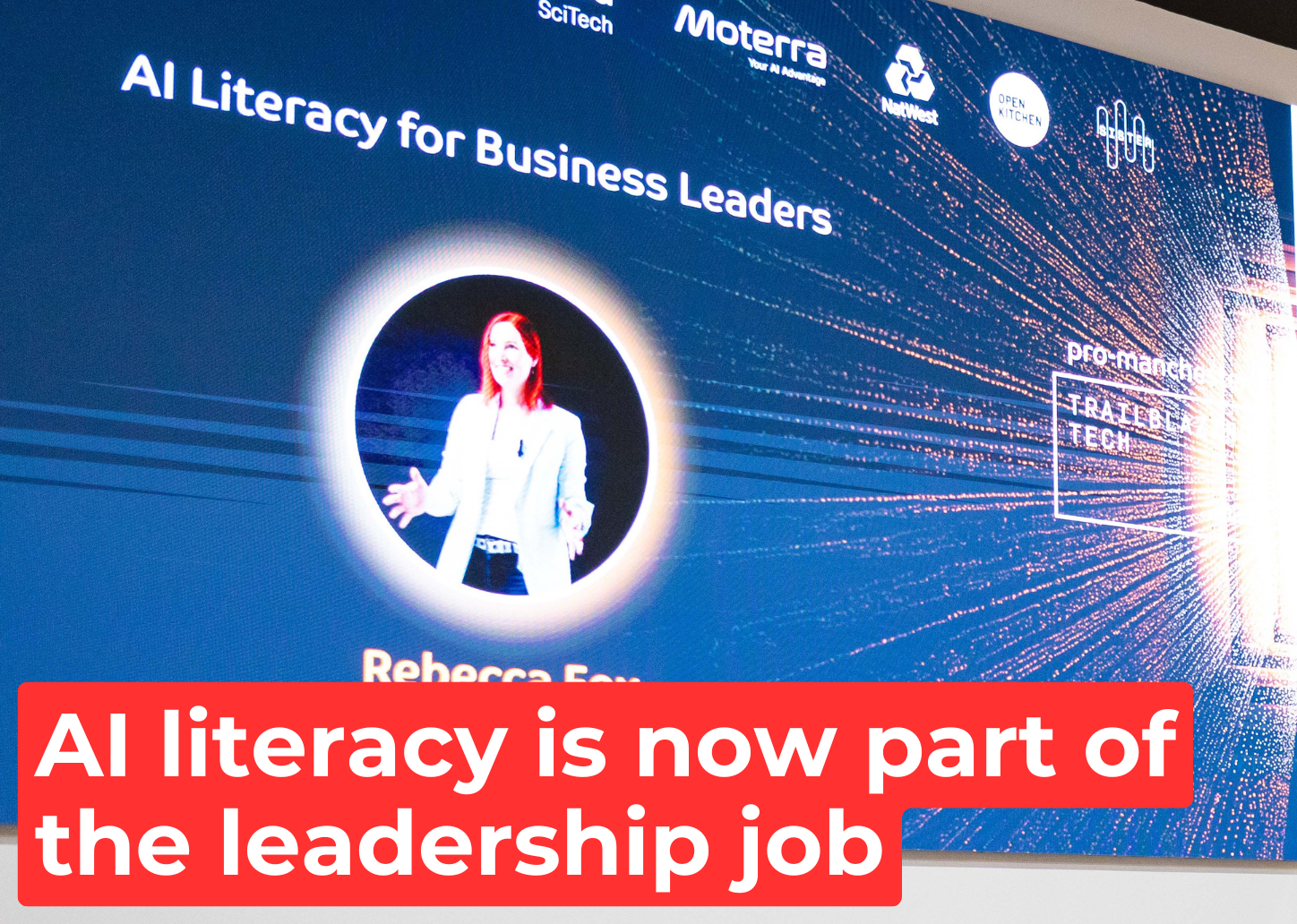
On 18 June, I delivered a keynote on AI literacy for business leaders at pro-Manchester’s annual Trailblazing Tech event. It brings together Manchester’s business leadership community, with an audience extending well beyond technology specialists. That made it a good place to explore a question many leaders are asking: where are we with AI, and are we doing enough?
AI has been developing for decades, but the arrival of tools such as ChatGPT has made it part of everyday business conversations. Leaders can see people experimenting, suppliers announcing new capabilities and competitors talking about what they’re doing. Working out what any of that means for your own organisation takes more thought.
There’s also that very human temptation to look around the room and wonder whether everyone else is further ahead. Are they doing more than us? Have they worked something out that we haven’t? Or are we doing rather better than we think?
I wanted the keynote to give people a clearer picture and a reason to challenge their own progress. Even when you’re pleased with what your organisation is doing, there’s value in asking what you haven’t explored, who hasn’t been involved and where your approach needs to develop.
The message I wanted people to take away was straightforward: you cannot ignore AI. Leaders have to lean in, and they have to bring their people with them.
Giving someone access to a tool is only the beginning. We wouldn’t normally introduce a new way of working and assume everyone would immediately know how to get the best from it. Yet with AI, it can be tempting to hand over a licence and expect productivity to follow.
People need to understand how to use it in the context of their work. They need opportunities to practise, question the output and improve their approach. They also need to see where it can make their working day better, rather than feeling they’ve simply been given another thing to learn.
That requires leadership attention. Leaders need enough understanding to ask useful questions, recognise opportunities and challenge what they’re being told. They need to make room for learning and help their teams turn experimentation into improvements in how work gets done.
For me, that’s why AI literacy belongs firmly on the leadership agenda. You don’t have to become a technical expert, but you do have to engage. You can’t make thoughtful decisions about something you’ve chosen to keep at arm’s length.
One of the loveliest parts of the day was speaking with people afterwards. Lots of audience members came over to say how much they’d enjoyed the keynote, ask about my views on AI and discuss the work I’m doing with clients. I always enjoy those conversations. They give people the chance to connect the talk with their own circumstances and explore the questions it has raised.
Getting people to think is a large part of why I enjoy speaking. I want them to reflect on what they’re doing, consider a different perspective and perhaps change their minds. A leader’s job involves thinking and reflecting, then turning that thought into action. A keynote can create a useful moment to pause and do the first two, before returning to the business and getting on with the third.
Thank you to pro-Manchester for inviting me to speak. Their events bring the Manchester leadership community together, and it was a pleasure to contribute to the conversation at Trailblazing Tech.
If you’re planning an event and looking for a keynote speaker on technology, AI or leadership, I’d love to hear from you.